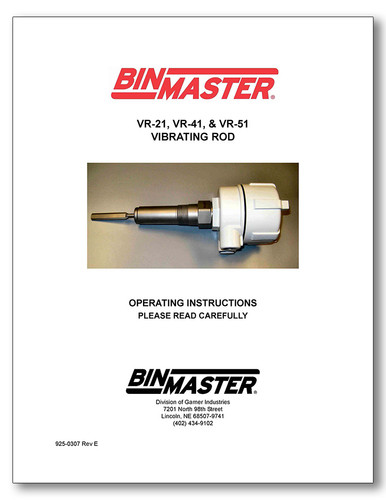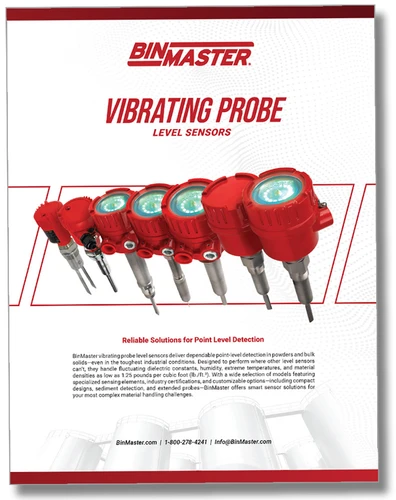

Top mounting for high-level detection






BinMaster vibrating rod level sensors provide dependable point level detection for powders, flakes, granules, and bulk solids. These sensors are ideal for high-level alarms, low-level alerts, or plugged chute detection in bins, silos, and hoppers. Now with IECEx/ATEX hazardous location approvals!
Vibrating probes are especially effective for lightweight, fluffy powders and flakes with bulk densities as low as 1.25 lb./ft.³ where other technologies may struggle to detect the presence of material.
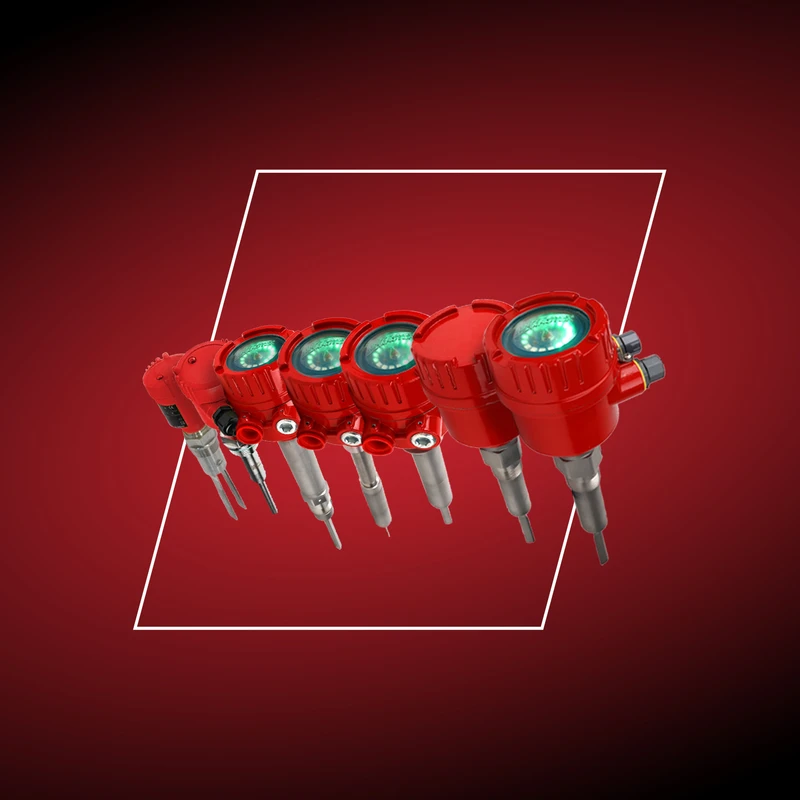
BinMaster offers a broad selection of vibrating probes.
These sensors provide reliable performance in materials such as Styrofoam®, plastic pellets, sawdust, carbon black, chalk, flour, and other lightweight bulk solids.
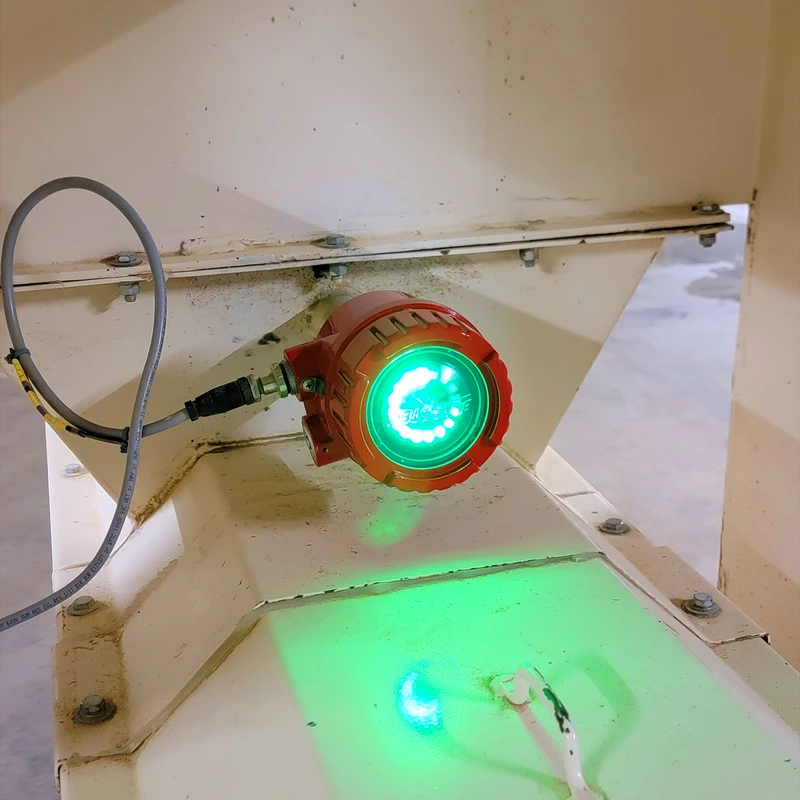
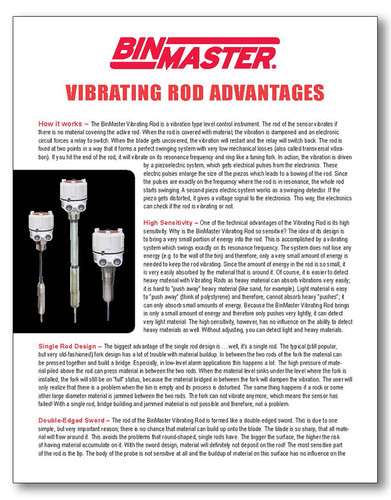
Vibrating rod level switches operate using a piezoelectric crystal element that causes the sensing blade or rod to vibrate at its natural frequency.
When the probe is uncovered, the vibrating element oscillates freely. But when material contacts—or covers—the probe:
When the material falls away from the probe, vibration resumes, and the sensor returns to an uncovered state.
This simple operating principle makes vibrating rods highly reliable and resistant to dust, buildup, and changing material characteristics.
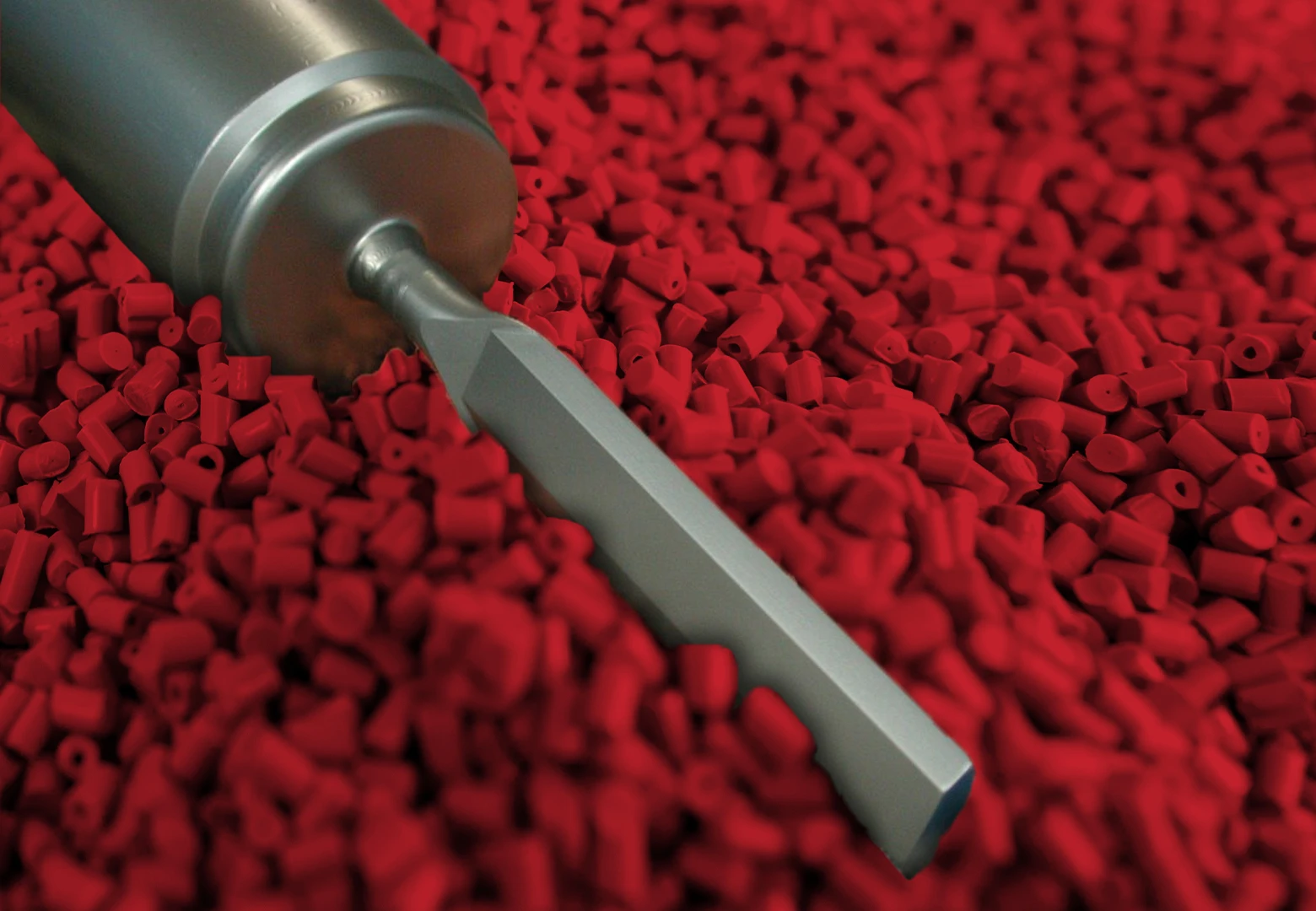
The unique sword-shaped blade is designed to prevent buildup and false alarms.
The slender blade encourages materials to flow past the probe to ensure reliable detection.
Unlike tuning fork sensors, the single-blade design eliminates bridging between forks, which can occur with certain materials.

A switch located inside the housing of the VRX21, VRX31, VRX41, and VRX51 allows operators to adjust sensitivity.
Position 1 – High Sensitivity detects extremely light or fluffy materials.
Position 2 – Low Sensitivity is used for heavier materials and prevents false signals from clinging.

VRX vibrating rods are C/US Class II, Division 1 certified for hazardous locations where combustible dust may be present.
For international applications, VRX models also hold IECEx/ATEX Zone 20 & 21 approvals.
Contact your local BinMaster Sales Manager for the latest updates on location approvals.
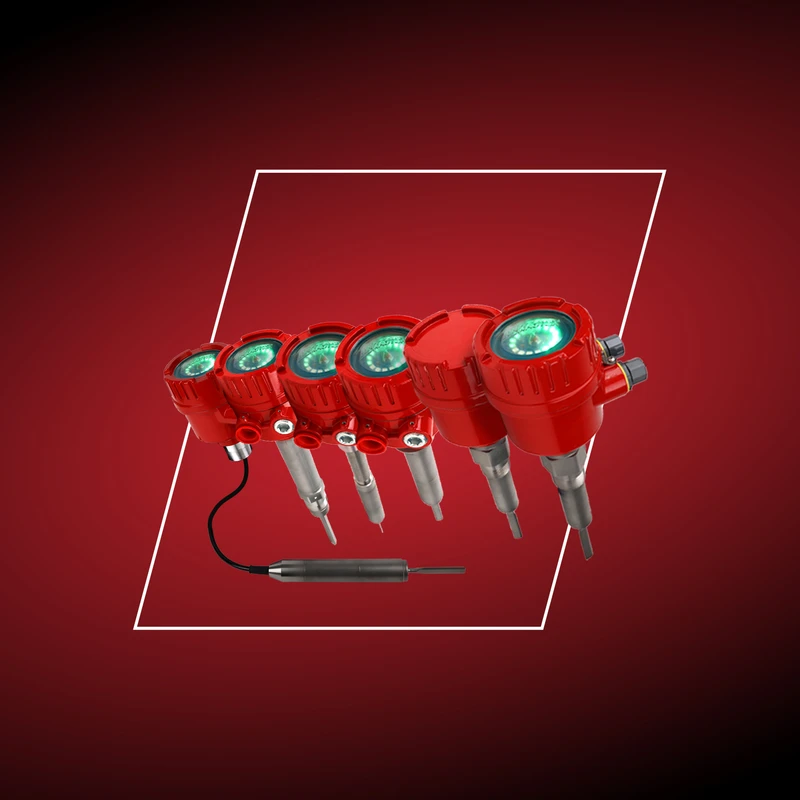
BinMaster’s sword-blade vibrating rods are designed for detecting lightweight materials.
Their wide, flat blade creates stronger vibration and higher sensitivity for detecting low-density powders and flakes.
Typical Materials: Styrofoam®, sawdust, carbon black, chalk, flour, and plastic flakes and pellets
Models: VRX21, VRX31, VRX41, VRX51, VRX61, and VRX71
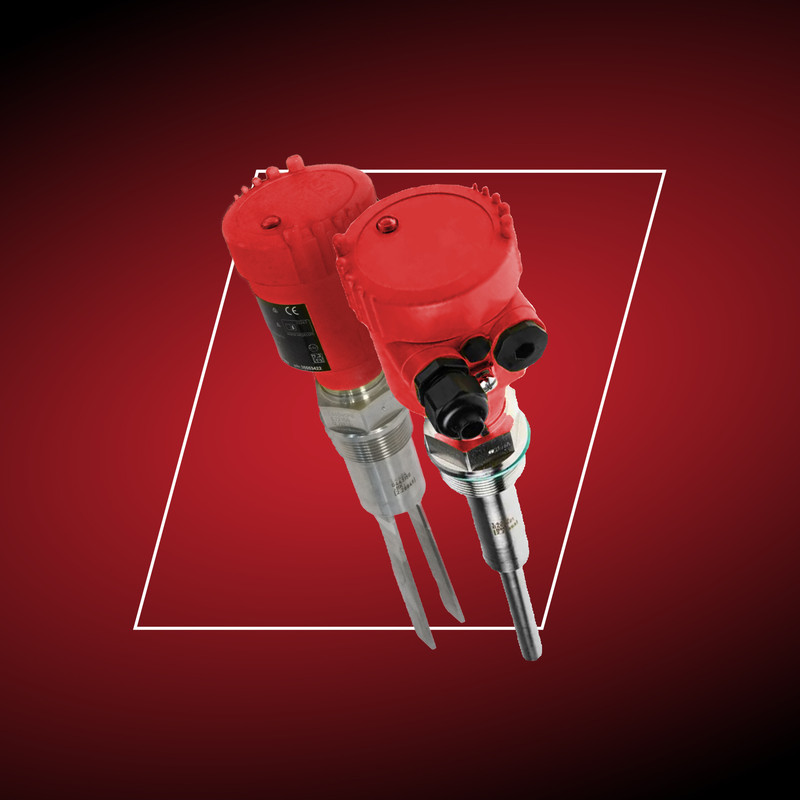
Round vibrating rods use a single stainless-steel rod that vibrates until material contacts the probe.
When vibration is damped by material, the sensor triggers a switch.
Vibrating forks use two vibrating tines that oscillate together. When material surrounds the forks, vibration stops and the sensor signals a covered condition.
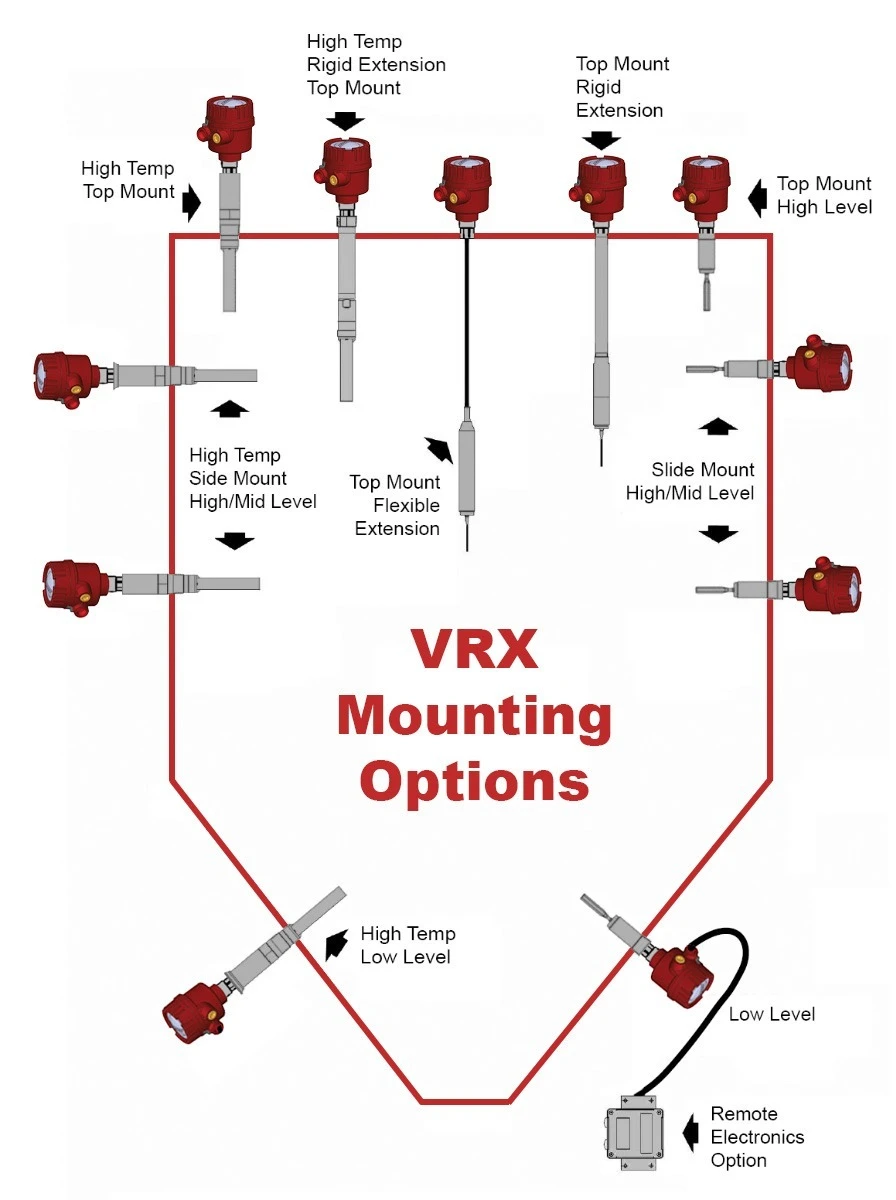
Top mounting for high-level detection

Side mounting for high-, mid-, or low-level alerts

Cone mounting for low-level or empty detection

Plugged chute detection
Powder-coated carbon steel mounting plates are available for flat or angled bin roofs.
Available mounting angles for angled roofs include 0°, 5°, 10°, and 30° plates.
Side or cone installations typically use a 0° mounting plate.
While the VRX21 standard vibrating rod is always in stock, BinMaster can customize vibrating probes for specific applications.
BinMaster’s in-house machining and assembly allows each sensor to be configured for the specific vessel and material. Custom options include:

Extended insertion lengths, for thick bin walls or extended level detection

Flexible cable probes, for use where a rigid probe may be damaged

Sediment detection probes, for settled material in liquids

Remote electronics housings, to distance electronics from heat
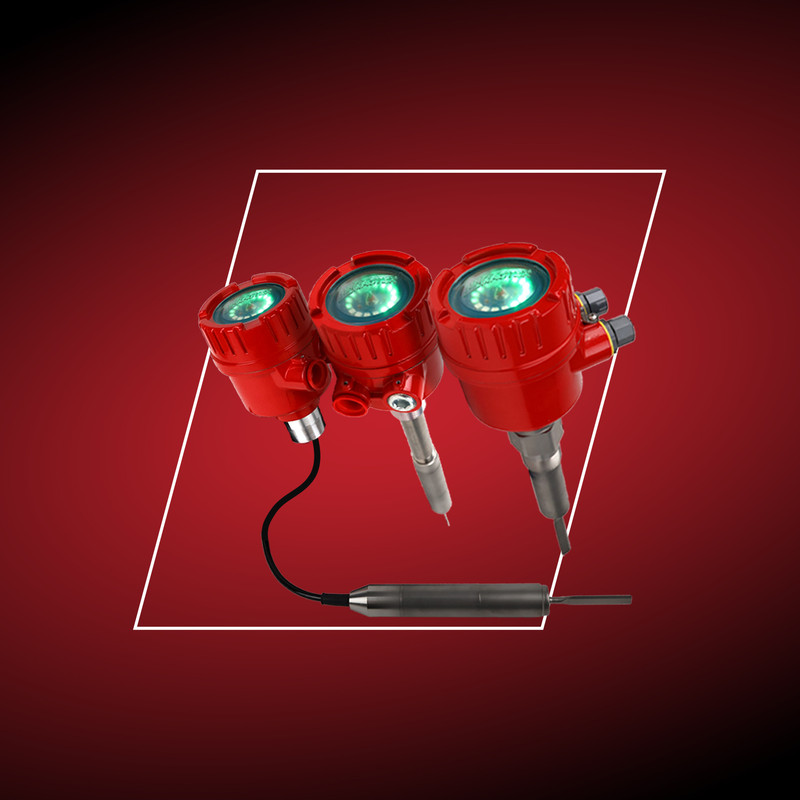
The VRX21 is BinMaster's standard in-stock model with a 7.5-inch insertion length.
Typical uses include top- or side-mounted level detection, plugged chute detection, and low-level detection in vessel cones.
Rigid Extended Probes
The VRX41 can be extended from 13 inches to 13 feet using galvanized pipe, stainless-steel pipe, or sanitary pipe extensions.
Level detection for light, medium, and heavy materials.
Flexible Extended Probes
The VRX51 uses a steel-rope reinforced cable extension. Extension lengths range from 19 inches to 19.5 feet.
Flexible probes resist damage from falling material and are custom-built to customer specifications.
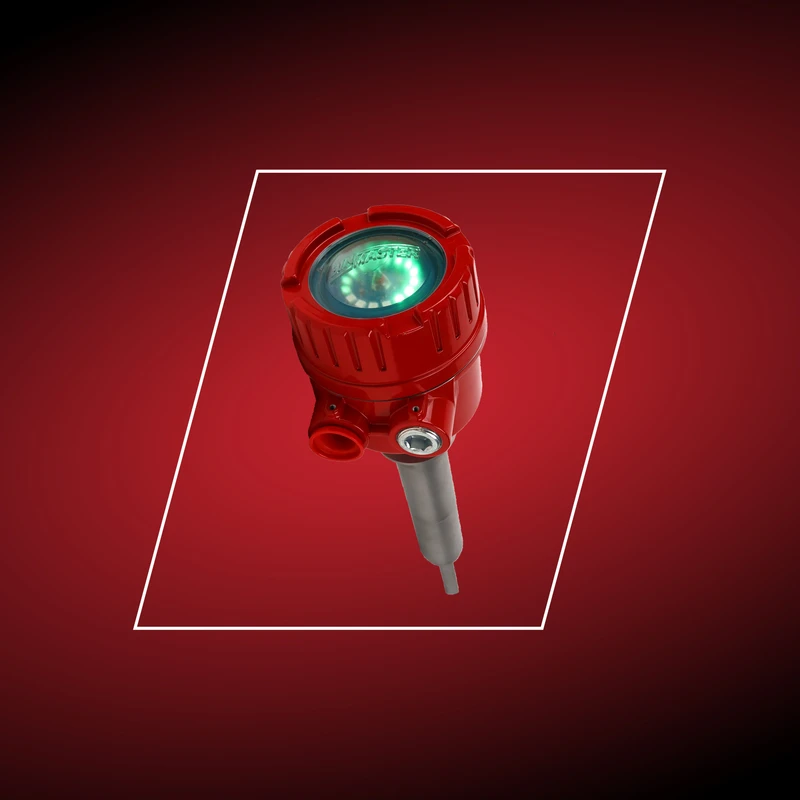
Sanitary Processing
The VRX31 sanitary vibrating rod is designed for food and pharmaceutical processing. It is suitable for clean-in-place systems.
Features include a 2" sanitary stainless-steel fitting and compatibility with Tri-Clamp connections. Optional stainless-steel extensions are available up to 6.56 feet.
Remote Electronics
Remote electronics allow the sensing probe to be separated from the electronics housing. Remote kits include a mounting plate and 20 feet of cable.
This option is useful when high vibration or high process temperatures are present and installation space is limited. Remote electronics are available for:
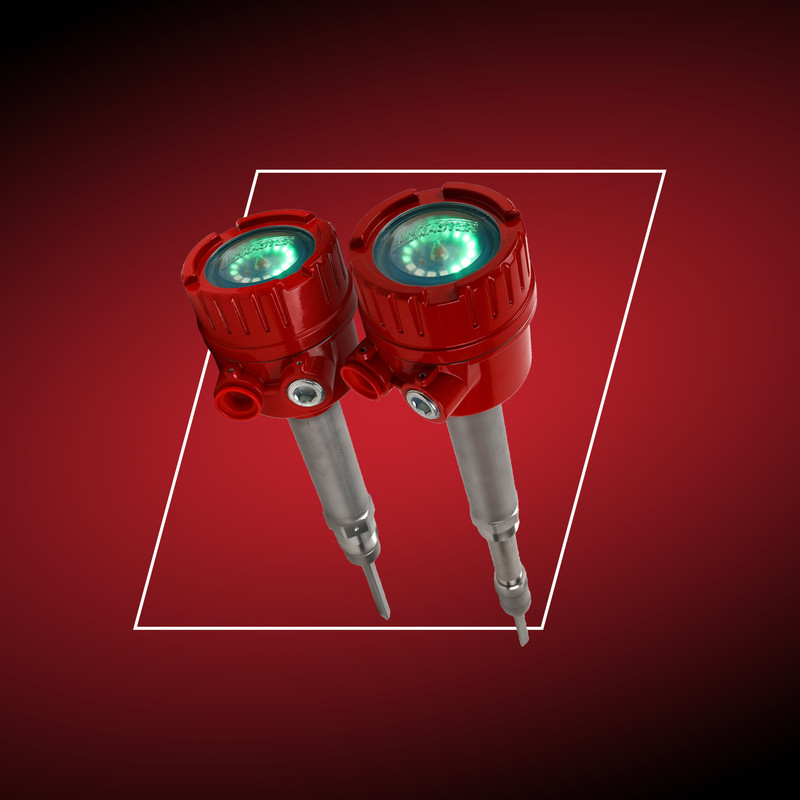
The VRX61 and VRX71 are designed for high temperature applications up to 482°F (250°C).
The VRX61 has a 7.25-inch probe, while the VRX71 can be extended up to 13.3 feet. More features include:
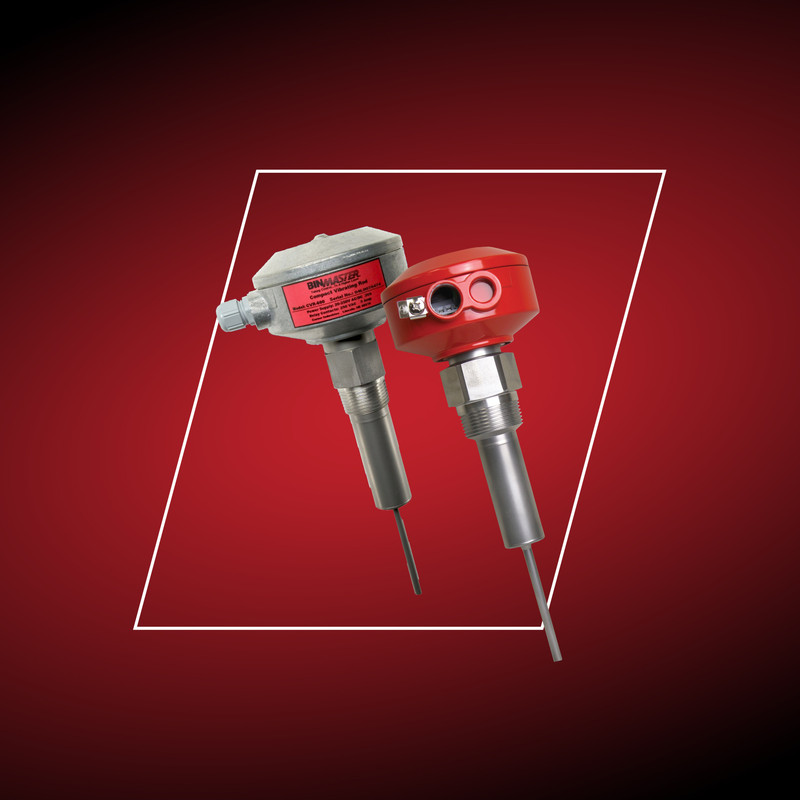
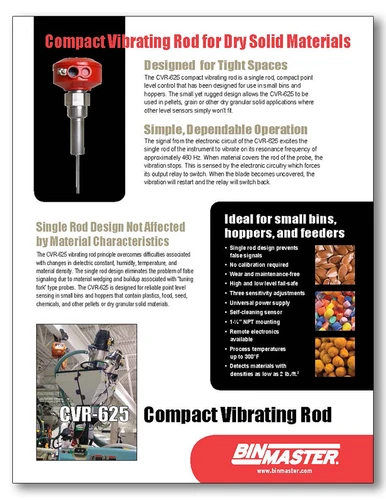
For small vessels, compact hoppers, or tight installations, BinMaster offers miniature vibrating rods: the CVR-625 and CVR-600. Features include:
In regard to mounting compact vibrating sensors, the CVR-625 has a 1¼" NPT connection, whereas the CVR-600 has a 1" NPT connection.
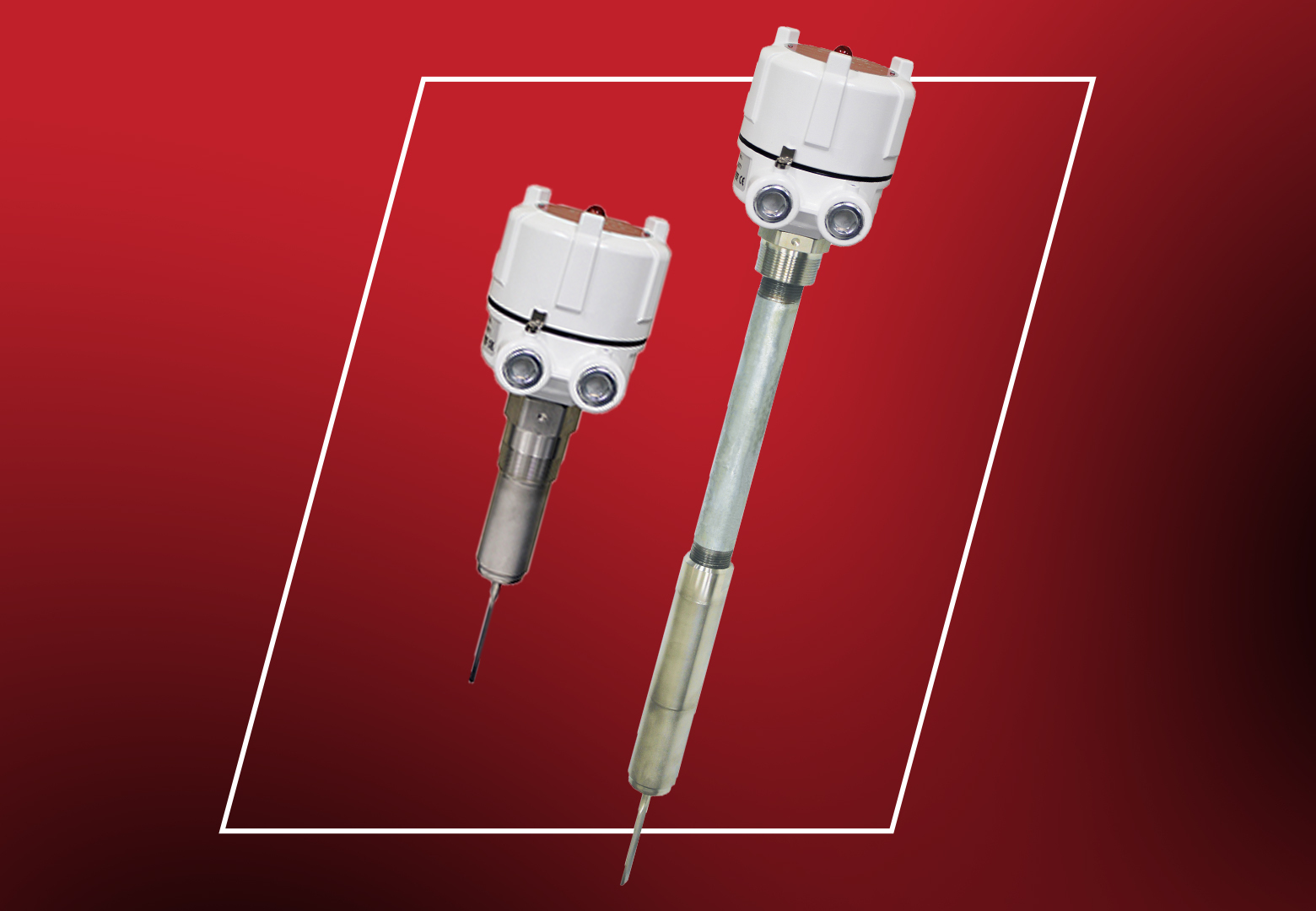
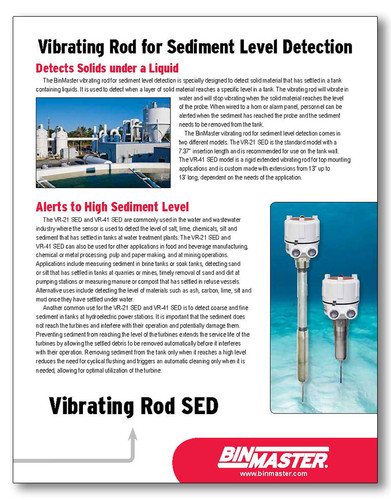
The VR-21 SED and VR-41 SED vibrating probe detects settled solids beneath liquids in tanks.
Rigid extensions for the VR-41 SED are available from 13 inches to 13 feet.
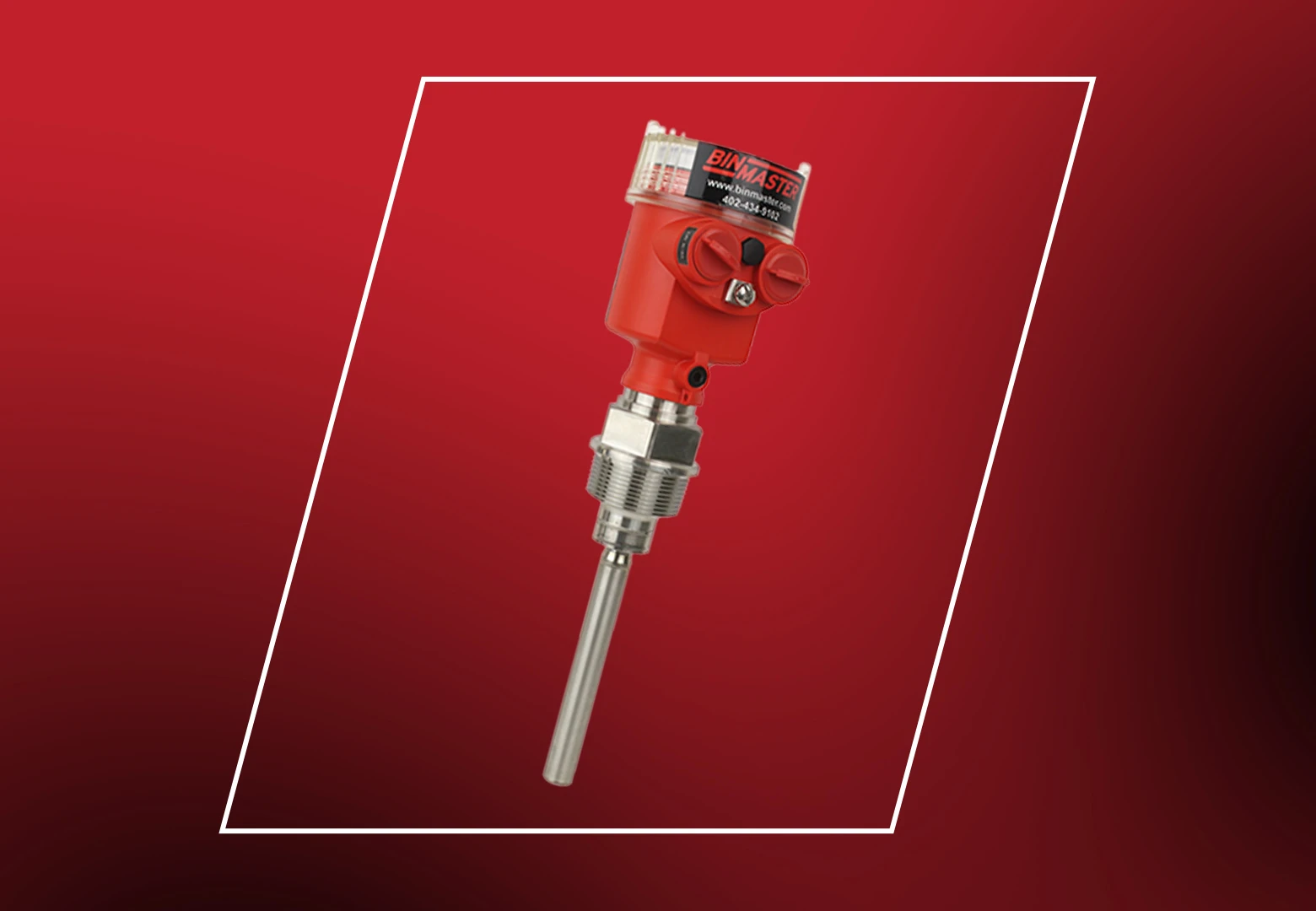
The VR-90 vibrating rod features a round stainless-steel rod designed for coarse materials.
It is also used when material type frequently changes in a vessel. Hazardous location approvals are available.
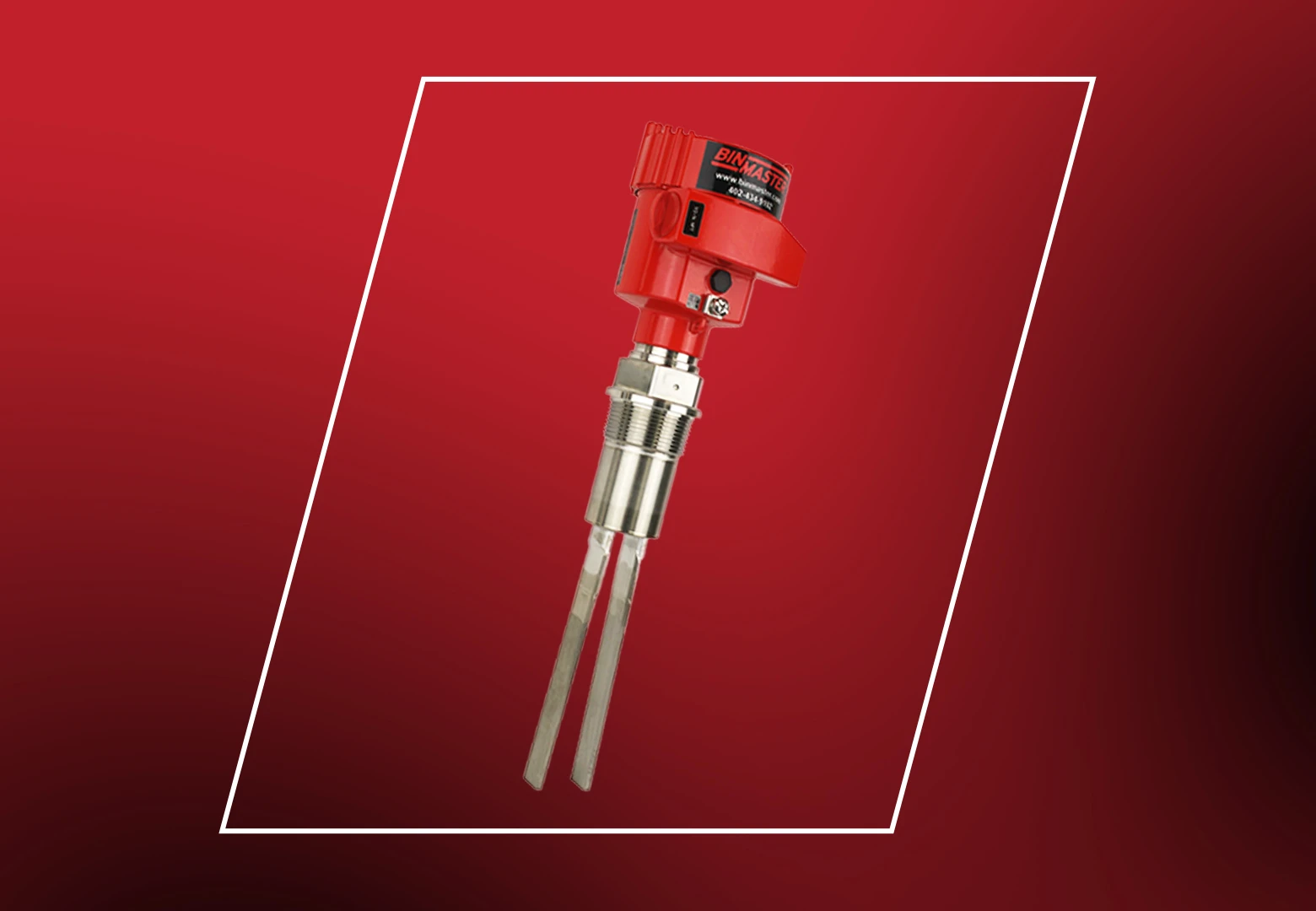
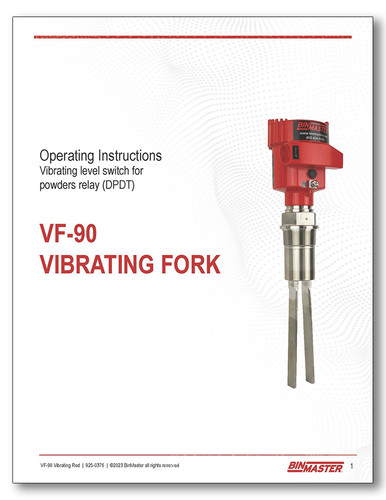
The VF-90 vibrating fork provides universal point level detection for powders and fine solids.
Applications include construction materials, feed ingredients, and plastic powders and flakes.
Stainless-steel housing options allow use in food or pharmaceutical environments.
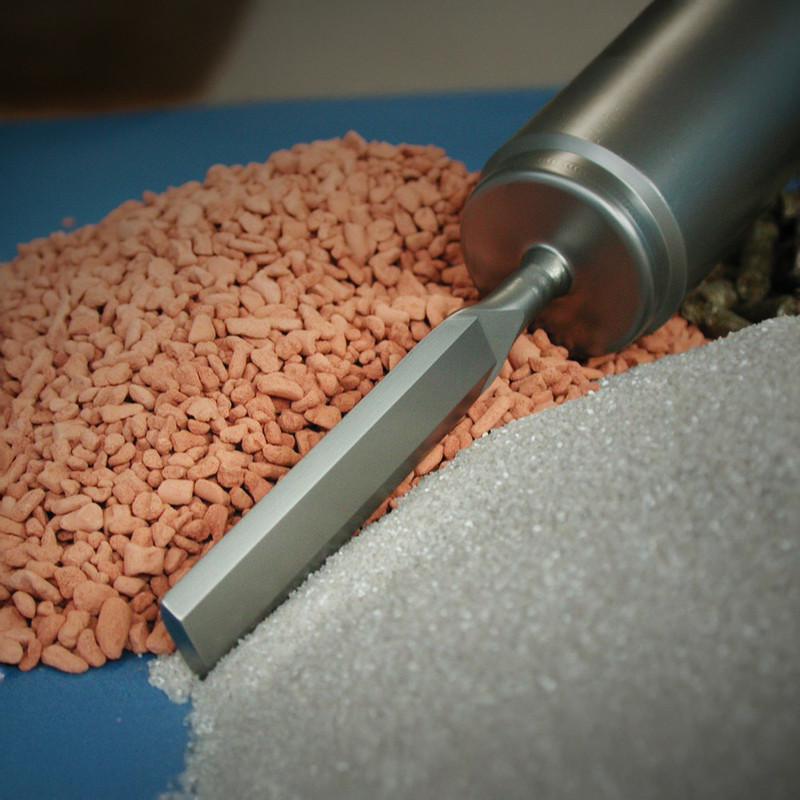
Because vibrating rods detect changes in vibration rather than dielectric properties, they provide reliable performance in low-density materials that capacitance probes or rotary paddles may not detect consistently.
Use vibrating rod sensors when:
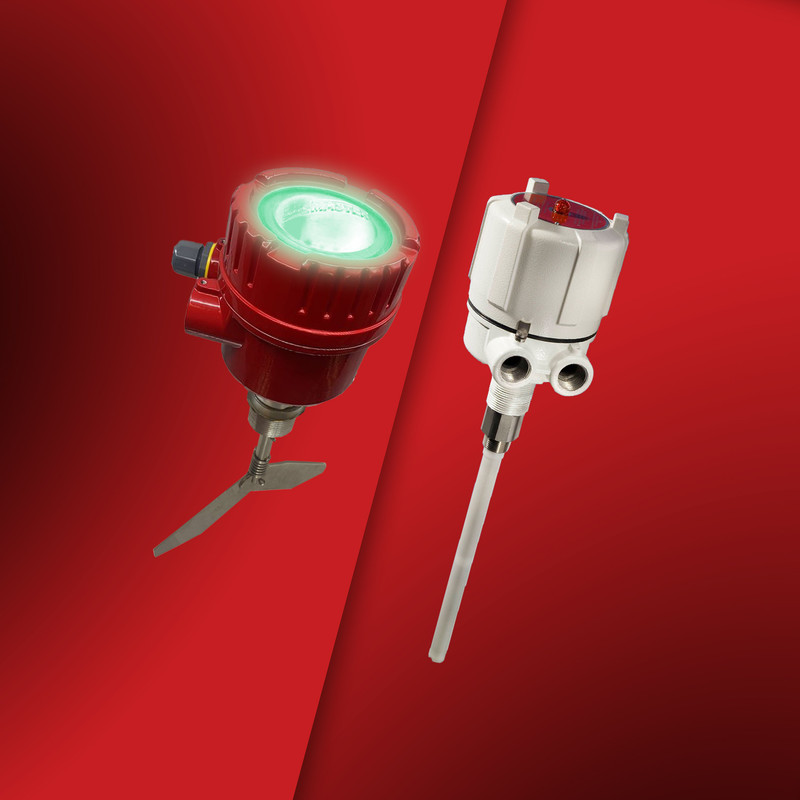
Different point level technologies perform best in different material types.
Use rotary level sensors when:
Use capacitance probes in:
| VRX21 | VRX31 | VRX41 | VRX51 | VRX61 | VRX71 | |
|---|---|---|---|---|---|---|
| Minimum Material Density | 1.9 lb./ft.³ (30 g/liter) | 1.9 lb./ft.³ (30 g/liter) | 1.9 lb./ft.³ (30 g/liter) | 1.9 lb./ft.³ (30 g/liter) | 1.9 lb./ft.³ (30 g/liter) | 1.9 lb./ft.³ (30 g/liter) |
| Ambient Temperature (Electronics) | -4°F to +140°F (-20°C to +60°C) | -4°F to +140°F (-20°C to +60°C) | -4°F to +140°F (-20°C to +60°C) | -4°F to +140°F (-20°C to +60°C) | -4°F to +140°F (-20°C to +60°C) | -4°F to +140°F (-20°C to +60°C) |
| Process Temperature (Probe) | STD probe: -4°F to +176°F (-20°C to +80°C); HT probe: -4°F to +284°F (-20°C to +140°C) |
-4°F to +176°F (-20°C to +80°C) | -4°F to +176°F (-20°C to +80°C) | -4°F to +176°F (-20°C to +80°C) | -4°F to +500°F (-20°C to +260°C) | -4°F to +500°F (-20°C to +260°C) |
| Conduit Entries | 3/4” NPT | 3/4” NPT | 3/4” NPT | 3/4” NPT | 3/4” NPT | 3/4” NPT |
| Enclosure Material | Die-cast aluminum; USDA-approved powder coat finish | Die-cast aluminum; USDA-approved powder coat finish | Die-cast aluminum; USDA-approved powder coat finish | Die-cast aluminum; USDA-approved powder coat finish | Die-cast aluminum; USDA-approved powder coat finish | Die-cast aluminum; USDA-approved powder coat finish |
| Enclosure Rating | NEMA Type 4X | NEMA Type 4X | NEMA Type 4X | NEMA Type 4X | NEMA Type 4X | NEMA Type 4X |
| Power Supply | 24 VDC or 115/230 VAC | 24 VDC or 115/230 VAC | 24 VDC or 115/230 VAC | 24 VDC or 115/230 VAC | 24 VDC or 115/230 VAC | 24 VDC or 115/230 VAC |
| Relay Output Rating | DPDT contacts; 5 Amps 250 VAC | DPDT contacts; 5 Amps 250 VAC | DPDT contacts; 5 Amps 250 VAC | DPDT contacts; 5 Amps 250 VAC | DPDT contacts; 5 Amps 250 VAC | DPDT contacts; 5 Amps 250 VAC |
| Time Delay | Configurable | Configurable | Configurable | Configurable | Configurable | Configurable |
| Mounting | 1-1/4” NPT or 1-1/2” NPT | 2” Tri-clamp | 1-1/2” NPT | 1-1/2” NPT | 1-1/2” NPT | 1-1/2” NPT |
| Approvals | Ordinary locations C/US Class II, Div 1 hazardous locations IECEx/ATEX Zone 20, 21 |
Ordinary locations C/US Class II, Div 1 hazardous locations IECEx/ATEX Zone 20, 21 |
Ordinary locations C/US Class II, Div 1 hazardous locations IECEx/ATEX Zone 20, 21 |
Unlisted | Ordinary locations C/US Class II, Div 1 hazardous locations IECEx/ATEX Zone 20, 21 |
Ordinary locations C/US Class II, Div 1 hazardous locations IECEx/ATEX Zone 20, 21 |
| VR-90 | VF-90 | |
|---|---|---|
| Process Temperature | -58° to +482°F (-50° to +250°C) | -58° to +482°F (-50° to +250°C) |
| Process Pressure | -1 to +25 bar/-100 to +2500 kPa (-14.5 to +363 psig) | -1 to +16 bar/-100 to +1600 kPa (-14.5 to +232 psig) |
| Ambient Temperature | -40°F to +176°F (-40°C to +80°C) | -40°F to +176°F (-40°C to +80°C) |
| Bulk Density | ≥0.008 g/cm³ (0.0003 lb./in.³) | ≥0.02 g/cm³ (0.0007 lb./in.³) |
| Process Fitting | Thread from G1½, 1½ NPT; Flanges from DN 50, 2” | Threaded 1.0”, 1.25”, and 1.5” NPT; 2.0” flange; 2.0” clamp |
| Power | 20 to 253 VAC, 50/60 Hz, 20 to 253 VDC | 20 to 253 VAC, 50/60 Hz, 20 to 253 VDC |
| Signal Output | Relay (DPDT), transistor (NPN/PNP), two-wire output, contactless electronic switch | Relay (DPDT), transistor (NPN/PNP), two-wire output, contactless electronic switch |
| Switching Relay | When being covered: 0.5 second; When being uncovered: 1 second |
When being covered: 0.5 second; When being uncovered: 1 second |
| Housing Material | Plastic, aluminum, stainless steel (precision casting), stainless steel (electropolished) | Plastic, aluminum, stainless steel (precision casting), stainless steel (electropolished) |
| Protection Rating | IP66/IP67 (NEMA Type 4X) | IP66, IP67, IP68 |
| Approvals | FM (NI) Class I, Div 2, Groups A, B, C, D (DIP) Class II, III, Div 1, Groups E, F, G FM (IS) Class I, II, III Div 1, Groups A, B, C, D, E, F FM (XP) Class I, Div 2, Groups A, B, C, D (DIP) Class II, III, Div 1, Groups E, F, G CSA (NI) Class I, II, III Div 2, Groups A, B, C, D, E, F, G CSA (XP) Class I, II, III Div 1, Groups A, B, C, D, E, F, (GIS) Class I, II, III Div 1, Groups A, B, C, D, E, F, G |
FM (NI) Class I, Div 2, Groups A, B, C, D (DIP) Class II, III, Div 1, Groups E, F, G FM (IS) Class I, II, III Div 1, Groups A, B, C, D, E, F FM (XP) Class I, Div 2, Groups A, B, C, D (DIP) Class II, III, Div 1, Groups E, F, G CSA (NI) Class I, II, III Div 2, Groups A, B, C, D, E, F, G CSA (IS) Class I, II, III Div 1, Groups A, B, C, D, E, F, G CSA (XP) Class I, II, III Div 1, Groups A, B, C, D, E, F, G |
| CVR-600 | CVR-625 | |
|---|---|---|
| Input Voltage | Wide range 20...250V AC/DC | Wide range 20...250V AC/DC |
| Power Consumption | 3 VA | 3 VA |
| Relay | SPDT 5A 250 VAC | SPDT 5A 250 VAC |
| Time Delay | 1 second from stop of vibration; 2 to 5 seconds for start of vibration |
1 second from stop of vibration; 2 to 5 seconds for start of vibration |
| Ambient Temperature Range (Electronics) | -4°F to +140°F | -4°F to +140°F |
| Process Temperature Range | Standard: -4°F to +175°F; High-Temperature: -4°F to +300°F |
Standard: -4°F to +175°F; High-Temperature: -4°F to +300°F |
| Minimum Material Density | 3.5 lb./ft.³ | 2 lb./ft.³ |
| Maximum Pressure | 145 psi | 145 psi |
| Wiring Cable | ½” | ½” |
| Mounting | 1” NPT | 1-¼” NPT |
| Enclosure | Diecast aluminum; NEMA-4 rated | Diecast aluminum; NEMA-4 rated |
| Probe Material | AISI 302 stainless-steel | AISI 302 stainless-steel |
Quick connector options allow vibrating probes to be removed and replaced without disconnecting wiring. Its benefits include:

Faster, simplified sensor replacement

Streamlined maintenance and repairs

Reduced operational downtime